
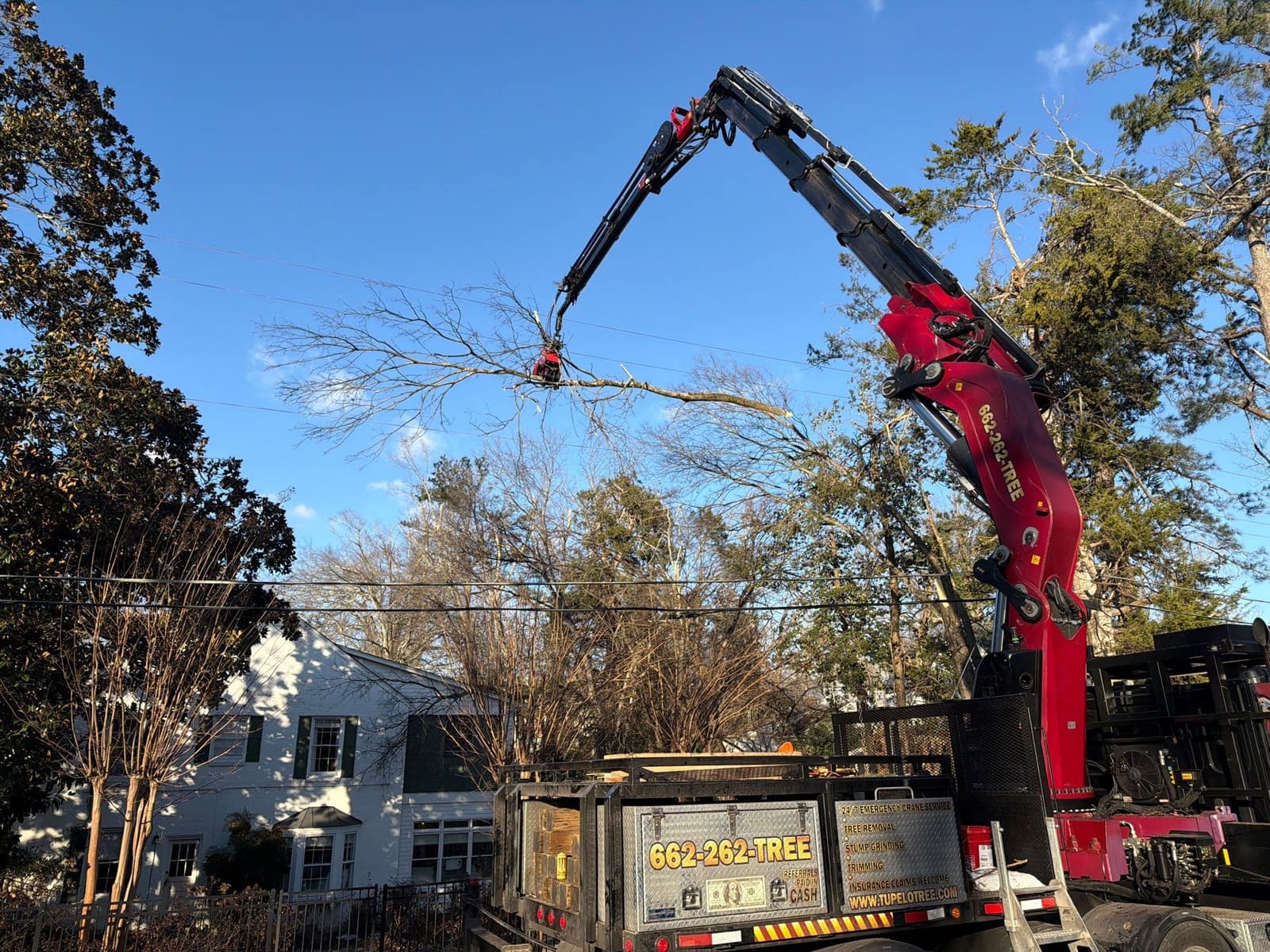
Land Clearing in Abbeville, MS is handled by licensed and insured crews from Oxford Tree Removal, powered by Garrison McKinney Tree Service. Clearing acreage for pasture, development, or general property use across Lafayette County.
We regularly work near Highway 7, Sardis Lake spillway area, Abbeville Missionary Baptist Church, where loblolly pine, shortleaf pine, post oak are common. Land clearing covers the bigger-acreage version of lot clearing: pasture reclamation, opening up wooded acreage for development, or clearing overgrown fence lines and field edges that have crept in over years of no maintenance. This is common work on properties out toward Sardis and Enid lakes and the rural stretches off Highway 6 and Highway 7.
- Acreage-scale tree and brush clearing
- Pasture and fence line reclamation
- Phased clearing for development timelines
- Erosion-conscious clearing near creeks and lake property
- Stump grinding or removal on request
- Equipment scaled to terrain and density
- Highway 7
- Sardis Lake spillway area
- Abbeville Missionary Baptist Church
- College Hill Road
- Ford's Well Road
- Abbeville Store
- Zip codes:
- 38601
- Common trees:
- Loblolly pine, Shortleaf pine, Post oak, Sweetgum, Blackjack oak
- Coordinates:
- 34.5029, -89.5017
- Drive from our Oxford yard:
- about 29 minutes
Pasture and field reclamation
Overgrown pastures around Lafayette County often have cedar and sweetgum encroachment along fence lines and field edges. We clear that back and grind stumps flush so the ground stays usable for grazing or hay.
Development and pre-construction clearing
For larger development parcels, we clear to a defined plan, often in phases matching a builder's or developer's timeline, and coordinate stump and debris removal with the grading schedule.
Working near lake and creek property
Properties near Sardis and Enid need extra care around buffer zones and drainage; we're mindful of erosion control and any setback requirements before clearing near water.
Rural property patterns
Most calls in Abbeville come from farms and homesteads with mature shade trees around the house and pine stands out back that were planted for pulpwood decades ago. As those stands mature and thin naturally, the remaining trees get more wind exposure and start going down in clusters during summer thunderstorms.