
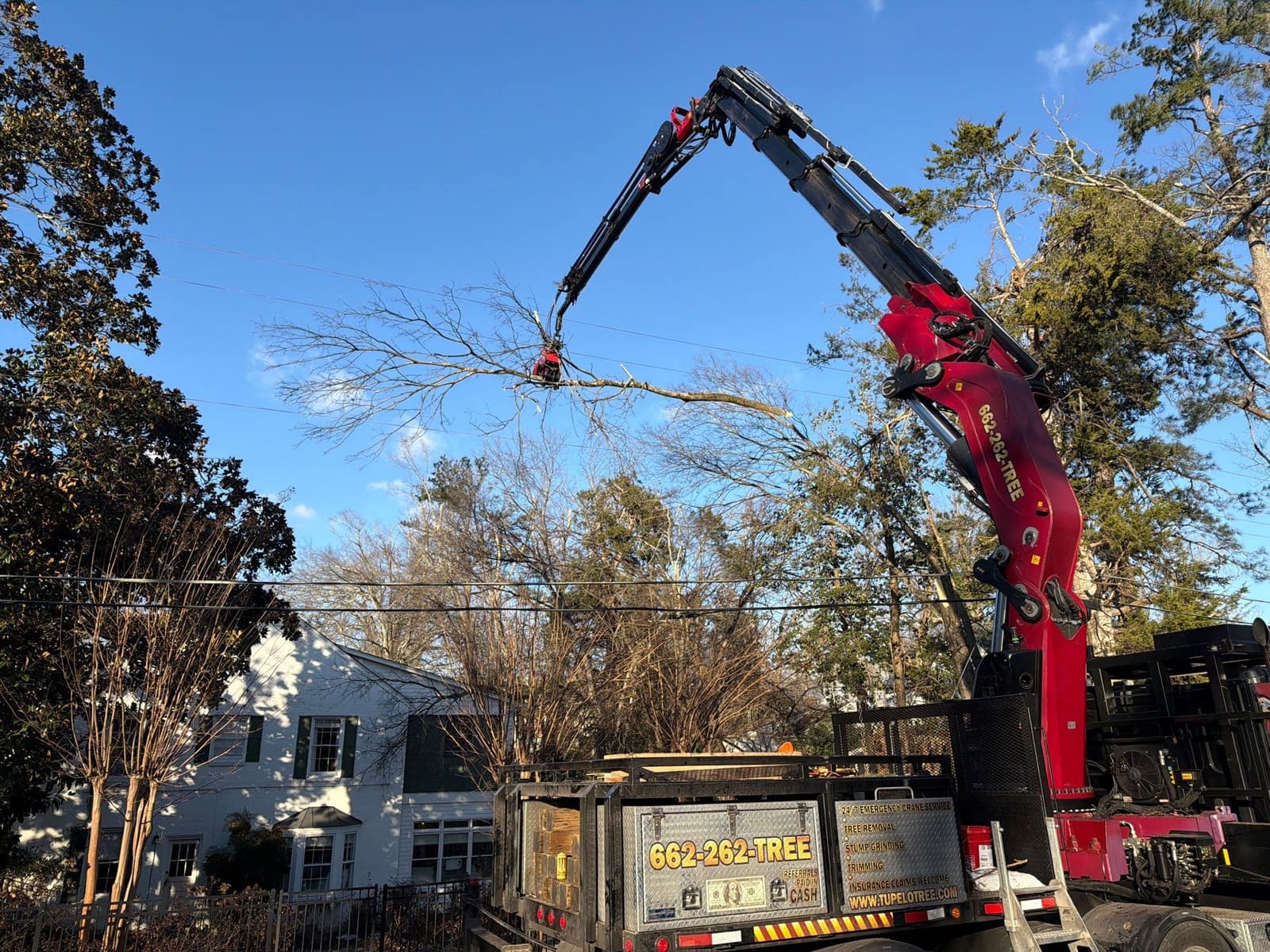
Tree Trimming in Bruce, MS is handled by licensed and insured crews from Oxford Tree Removal, powered by Garrison McKinney Tree Service. Canopy trimming for roofline clearance, driveway clearance, and safer branch structure.
We regularly work near Bruce sawmill area, Highway 32, Calhoun County line, where loblolly pine, shortleaf pine, water oak are common. Trimming is the maintenance side of tree work: cutting back limbs that are crowding a roof, scraping a driveway, or hanging low over where the kids play, without changing the tree's overall shape and health. We follow ANSI A300 pruning standards, meaning we cut at the branch collar and don't take more than about a quarter of live canopy in one visit.
- ANSI A300 standard pruning cuts
- Roof, gutter, and driveway clearance
- Deadwood and crossing-limb removal
- Canopy raising for lawn equipment and vehicle clearance
- Debris chipped and hauled same day
- Dormant-season scheduling for larger trims
- Bruce sawmill area
- Highway 32
- Calhoun County line
- Bruce City Park
- Skuna River tributaries
- Zip codes:
- 38915
- Common trees:
- Loblolly pine, Shortleaf pine, Water oak, Hickory, Sweetgum
- Coordinates:
- 33.9926, -89.3480
- Drive from our Oxford yard:
- about 56 minutes
Clearance trimming
We cut limbs back off roofs, siding, and gutters, and raise canopy over driveways and walkways so vehicles and people have clean overhead room. This is the most requested trim around Oxford's older neighborhoods with big shade oaks close to the house.
Structural and safety trimming
We remove dead, crossing, and rubbing branches, and reduce weight on limbs with a bad crotch angle before they fail on their own in a wind event. This kind of trim matters most on water oaks and pecans, both prone to shedding large limbs with no obvious warning.
Timing
Late winter, while trees are dormant, is the best window for heavier structural trims. Light clearance and deadwood removal can happen any time of year.
Sawmill and industrial adjacent lots
Homes near the mill and rail spur tend to have older trees that were left standing when the neighborhood was built, and now many are reaching the end of their safe lifespan, needing removal before they come down on their own near active work areas.