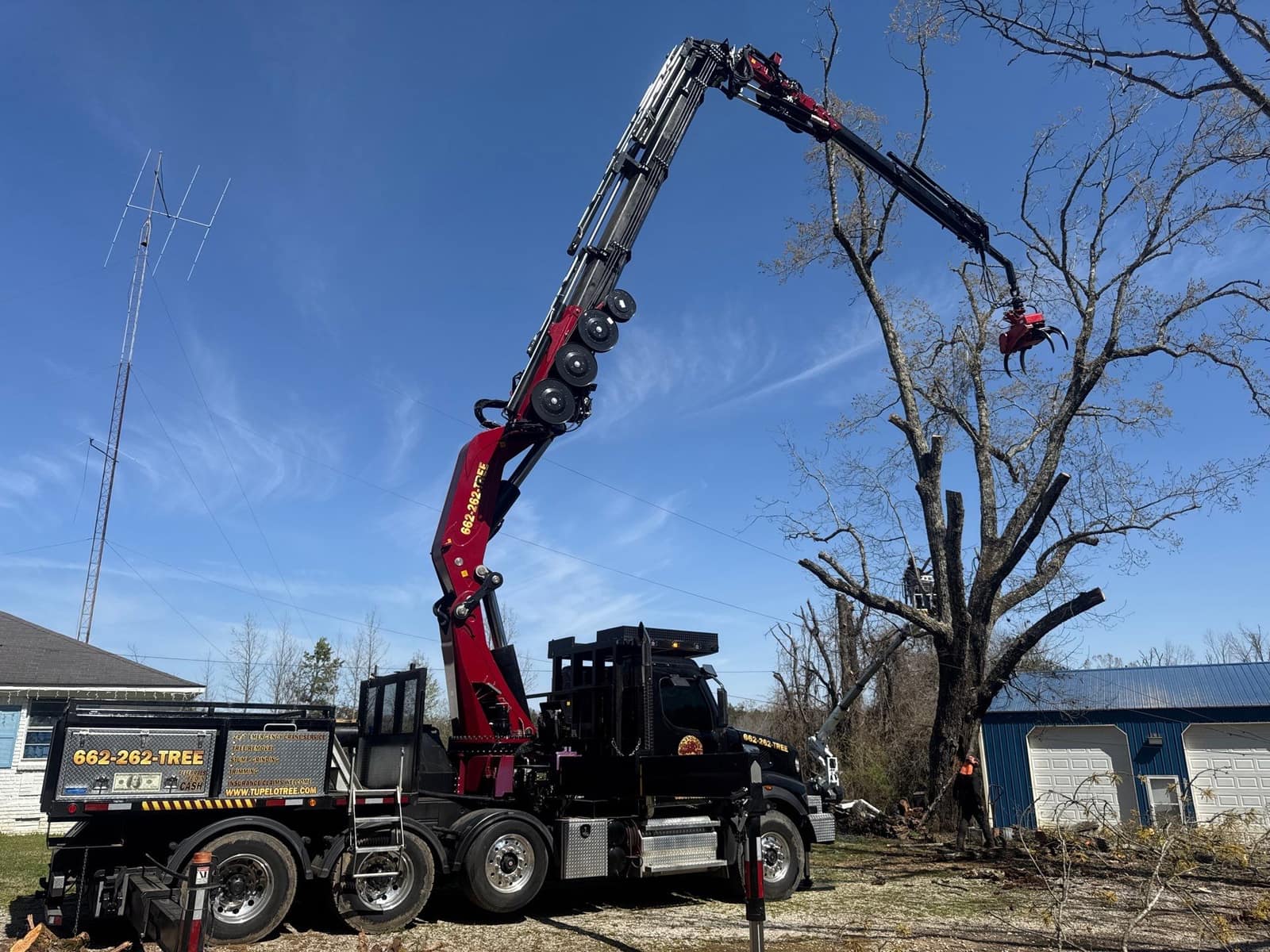
Some trees are too large, too rotten, or positioned too badly for a standard climb-and-rig removal to be the safe option. A big loblolly leaning directly over a house with root rot at the base, or a massive water oak wedged between two structures with no rigging path, is where a crane changes the job from risky to controlled.
The crane doesn't do the cutting, our climber or bucket operator still makes every cut, but instead of lowering a section by rope and friction, the crane lifts it straight up and swings it clear to a drop zone away from the target.
What The Job Includes
- For oversized, decayed, or extreme-lean trees
- Crane lifts sections; our climber makes every cut
- Coordinated street or driveway crane placement
- Utility and structure clearance checked before lifting
- Full processing and haul-off after the lift
- Site assessment required before quoting crane work
When a crane makes sense
Extreme lean toward a structure, significant trunk or root decay that makes climbing unsafe, very large diameter trees where rigging loads would exceed safe rope capacity, or removals where the drop zone is so tight that lowering by rope simply isn't an option.
How the job runs
We coordinate crane placement, which needs stable, accessible ground, usually a driveway or street setup, and confirm overhead and underground clearances first. Sections are cut, lifted, and set down in a clear zone, then processed and hauled like any other removal.
Cost and scheduling
Crane work costs more than a standard removal because of the extra equipment and crew coordination, but for the right tree it's actually the safer and sometimes faster option since large sections come out in one lift instead of many small rigged pieces.