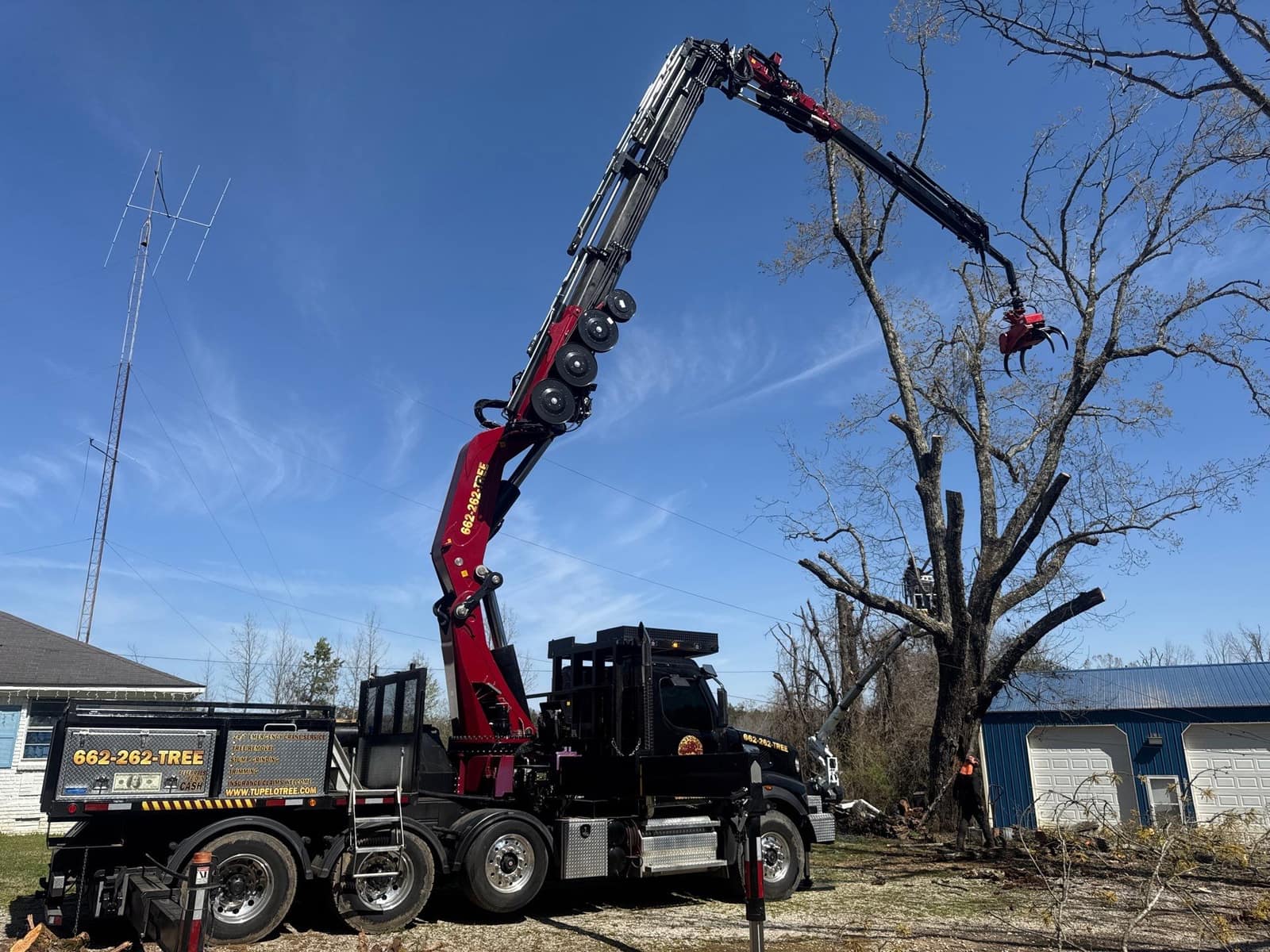
This is for the tree you already have a bad feeling about: dead limbs breaking off in normal wind, a trunk with a visible crack or fungal conks at the base, a lean that's gotten noticeably worse, or roots heaving up out of the ground after a wet season. These trees don't need to wait for a storm to become a problem.
We assess hazard trees on a few concrete factors: species failure history, decay indicators, lean direction and rate of change, and what's within striking distance if it goes down. That assessment decides whether it's a same-week job or something we tell you can wait.
What The Job Includes
- Hazard assessment based on species, decay, and lean
- Priority scheduling for active failure risk
- Bucket, climbing, or crane removal depending on condition
- Special attention to loblolly pine root failure after wet soil
- Documentation provided if insurance or HOA needs proof of hazard
- Honest opinion if a tree can be saved instead of removed
Warning signs we look for
Mushroom conks or fungal brackets at the base or trunk, which usually mean internal decay. Cracks or seams running up the trunk. Large dead limbs in the canopy, especially on water oaks and pecans known for dropping big wood with little warning. Root heaving after saturated soil, common after a wet stretch of loblolly pine ground.
Why loblolly pines fail after wet weather
Loblolly pines have a relatively shallow root system for their height, and after extended rain saturates the soil, that root plate loses its grip. Combine that with a wind event and you get pines that snap or tip over that were fine the week before. We watch for this pattern closely after Oxford's wetter spring stretches.
Removing a hazard tree safely
Depending on decay and lean, we may climb, use the bucket truck, or bring in a crane if the risk of a controlled climb is too high. Hazard removals often move faster on scheduling than routine removals because the risk window matters.