A mulching head mounted on a skid steer chews through brush, vines, and small-to-medium trees and turns them into mulch spread right where they stood. No burn pile, no hauling truckloads of brush off-site, and the ground cover left behind actually helps hold soil and suppress regrowth for a while.
It's a good fit for overgrown acreage, fence lines choked with cedar and sweetgum, and any clearing job where hauling debris off would be slow or expensive.
What The Job Includes
- Clears and mulches brush and small trees in one pass
- No burn pile or debris hauling required
- Good fit for dense underbrush and cedar/sweetgum stands
- Mulch layer helps with erosion control
- Faster than cut-and-haul on larger acreage
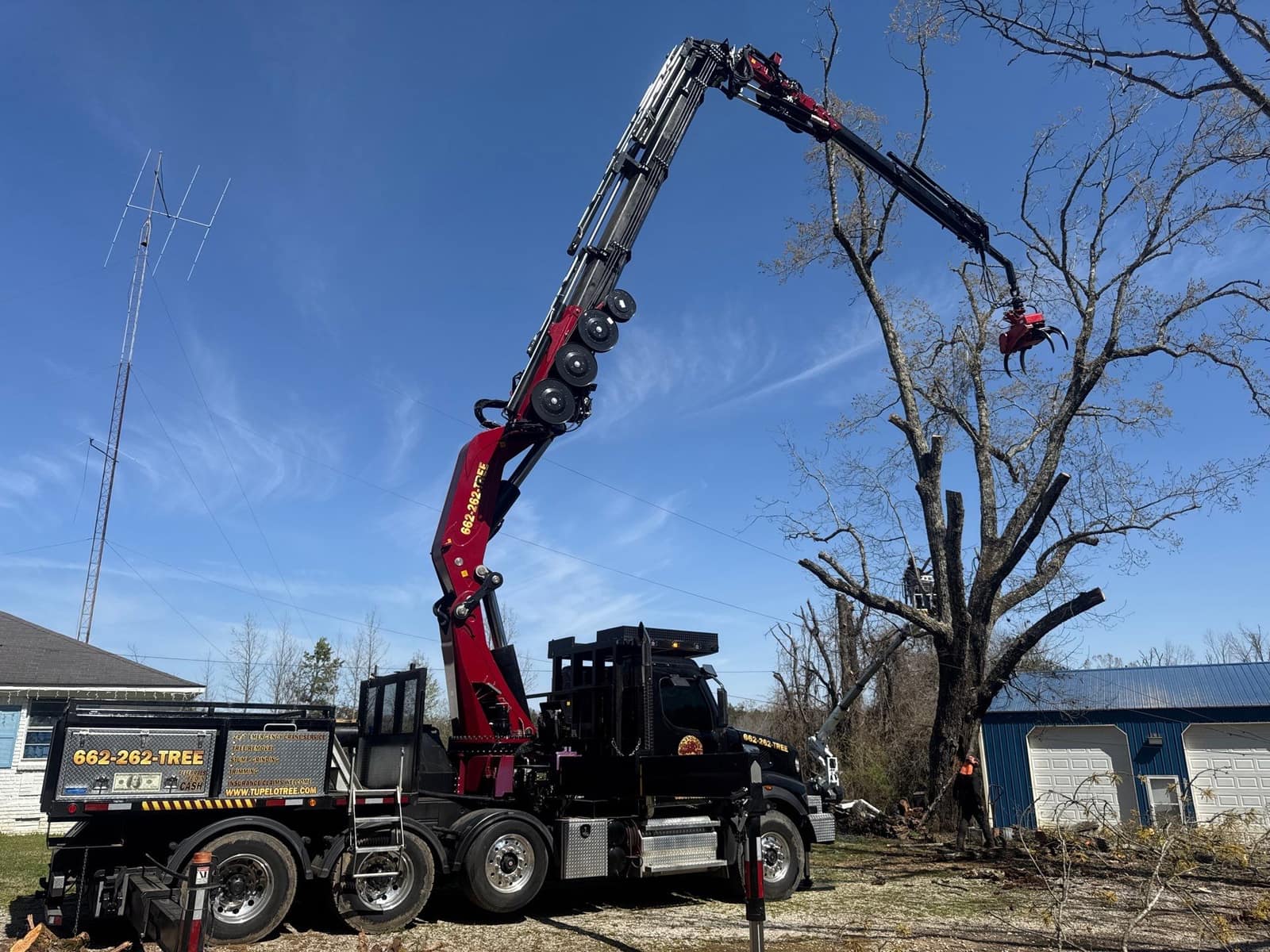
- Works alongside conventional cutting for larger mature trees
Where mulching works best
Dense underbrush and small-diameter tree stands, generally up to 6 to 8 inches or so depending on species and the machine we bring. It's less suited to large mature hardwoods, which still need to be felled and processed conventionally.
One-pass clearing
The machine clears and mulches in the same pass, which makes it faster than cut-and-haul clearing for brushy acreage. This matters on larger Lafayette County parcels where hauling debris off multiple acres would take days on its own.
Ground cover benefits
The mulch layer left behind helps control erosion and suppresses some regrowth, which is useful on slopes or near drainage on properties close to Sardis and Enid where bare, cleared ground can wash out after a hard rain.